Solid Surface vs. Quartz: The Ultimate Countertop Guide
When designing a premium kitchen, a luxury bathroom, or a high-traffic commercial space, the countertop material sets the tone for the entire environment. Two of the most popular and highly searched choices in modern architecture are Solid Surface (often known by brands like Corian) and Quartz.
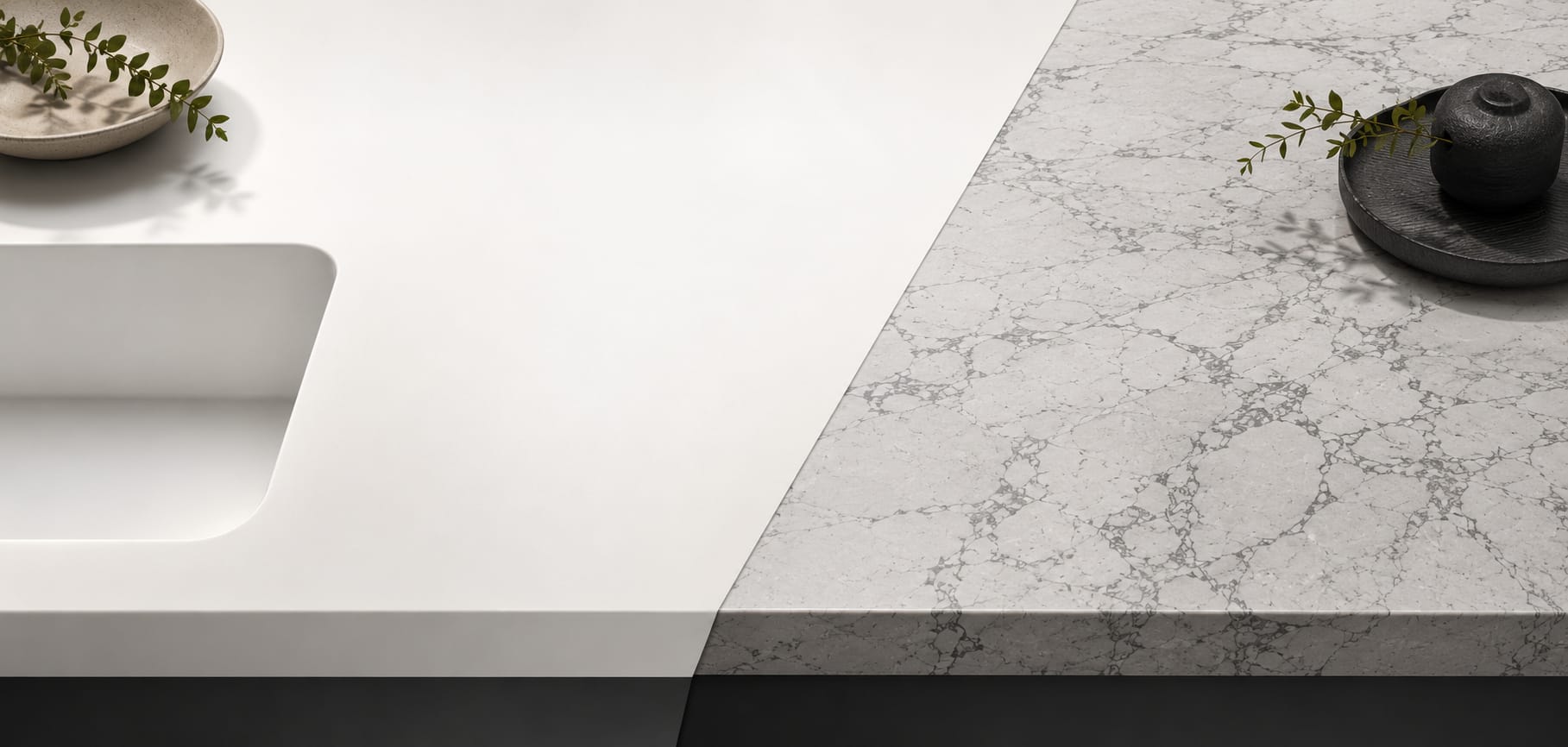
Both materials offer exceptional durability and aesthetic appeal, but they serve entirely different design philosophies. While Quartz is engineered to mimic the deep, natural veining of stone with a high-gloss finish, Solid Surface shines in its ability to be thermoformed into seamless, monolithic structures with invisible joints.

Seamless solid surface integrated sink design
Aesthetics Meets Functionality: Seamless vs. Engineered Beauty
The greatest advantage of Solid Surface is its seamless nature. Integrated sinks, sloped washbasins, and curved backsplashes eliminate dirt-trapping crevices, ensuring maximum hygiene. This makes it perfect for minimalist designs and commercial restrooms where cleanliness is paramount.,Quartz, on the other hand, is highly scratch-resistant and brings a luxurious, heavy stone feel to any room. However, Quartz will always have visible seams when connecting multiple slabs, which can disrupt a purely monolithic look.,Your choice ultimately depends on whether you prioritize the flawless, sculptural minimalism of Solid Surface or the rich, natural-stone durability of engineered Quartz.
Explore Our CollectionsAt Vera Stone, we understand that every architectural project has unique requirements. Whether you are aiming for a monolithic, avant-garde design using Glacier White solid surface or a classic luxury aesthetic with heavily veined quartz, flawless execution is what truly matters.
Our expert design team and advanced fabrication techniques ensure that whichever material you choose, the final result will elevate your living spaces into a timeless masterpiece.